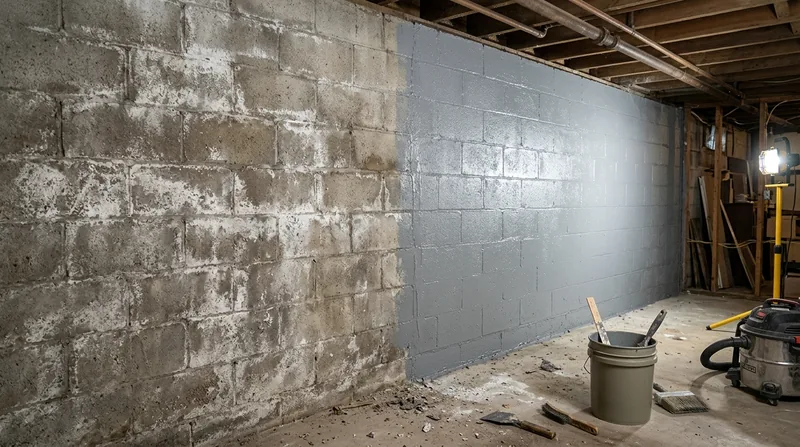




Basement Wall Sealing in Bismarck: Stop Damp Walls Before They Cost You
Bismarck sits where the Heart River meets the Missouri, on bluffs of glacial till clay and river-bottom silt that push water hard against residential foundations. If you have damp, chalky, or weeping basement walls, Basement Wall Sealing in Bismarck is the first line of defense. We work on 1880s brick Victorians in the Cathedral District, 1950s bungalows in Highland Acres, split-levels across south and east Bismarck, and poured-concrete basements in Lincoln. Sealing is not a cure-all, and we tell you plainly when it is enough and when hydrostatic pressure demands a different answer. Call (701) 450-3689 to book a free basement inspection and find out which problem you actually have. Start with our basement waterproofing overview to see how wall sealing fits into a full system.
Why Basement Wall Sealing Matters in Bismarck's Clay and River-Bottom Soil
Bismarck's upland clay holds water like a bowl, and the river-bottom silt in south Bismarck drains slowly after the spring melt. Both push moisture through block and brick walls, leaving efflorescence and a musty smell that never quite goes away. Our deep frost and hard freeze-thaw cycles open hairline cracks that widen every winter. Sealing the wall surface addresses dampness and vapor movement, but it cannot hold back a rising water table.
- We remove efflorescence and mineral bloom so the sealer bonds to sound masonry, not chalk.
- We apply penetrating sealers on block and poured walls to block vapor transmission.
- We use membrane sealers where the wall is damp but not actively leaking under pressure.
- We inspect for structural cracking and tell you when crack injection or drainage is the real fix.
If your wall seeps only after heavy rain, sealing may be the whole job; if it runs constantly in spring, read the wall before you buy a bucket of sealer.
Key info: A 1920s foursquare near the Capitol with chalky block walls and no active running water is a sealer candidate. A 1960s ranch in south Bismarck with water on the floor every March is not, and we tell you so on the first visit.
For official guidance on permits and local code, check the City of Bismarck building department before any work that alters drainage.
How We Seal Basement Walls in Bismarck, Step by Step
We start by reading the wall, not by opening a bucket. A moisture meter and a visual pass tell us whether the problem is surface condensation, vapor drive, or hydrostatic pressure from saturated glacial clay. That distinction decides whether sealing is the right call or whether you need drainage first. Here is how a typical sealing job runs on a Bismarck home.
- We inspect the wall, footing area, and grading, and we check for active seepage and structural cracks.
- We wire-brush and scrape loose mortar, efflorescence, and old paint so the sealer reaches sound masonry.
- We fill small voids and parge rough spots where the block face is crumbling.
- We apply the sealer in the correct number of coats for the wall material and moisture reading.
- We extend downspouts and correct grading so roof water moves away from the foundation.
- We leave you a written note on what we found and what to watch for at the next spring melt.
When the wall is wet because of pressure, we point you to an interior drain tile system instead of selling you a sealer that will fail.
Key info: On a 1950s Tudor in Highland Acres, we found damp block walls and a downspout dumping at the corner. Sealing plus a downspout extension solved it. Two blocks over, the same wall symptom traced to a failed footing drain, and sealing alone would have been money wasted.
Sealing Approaches We Use on Bismarck Basement Walls
Not every damp wall needs the same product. We match the approach to the wall material, the moisture reading, and whether the water is vapor or liquid. The table below shows the main options we use on Bismarck and Mandan homes.
| Approach | Description | Best for |
|---|---|---|
| Penetrating sealer | Soaks into block and poured concrete and blocks vapor transmission without a surface film. | Damp, chalky walls with efflorescence but no running water. |
| Membrane sealer | Flexible coating that bridges hairline cracks and resists mild pressure. | Block walls with minor seepage at the mortar joints. |
| Parging plus sealer | Repairs spalled mortar and rough block faces before sealing. | Older brick and fieldstone foundations in the Cathedral District. |
| Crack injection first | Epoxy or polyurethane injection closes active cracks before any sealer goes on. | Poured walls in Lincoln and north Bismarck with visible vertical cracks. |
| Drainage referral | When pressure is the cause, we recommend drainage instead of sealer. | Walls that run water every spring snowmelt. |
We choose the approach after reading the wall, and we write the reasoning into your estimate so you can compare it with other bids.
Basement Wall Sealing Cost in Bismarck: What to Expect
Most basement wall sealing jobs in Bismarck start around $1,500 for a standard basement with accessible walls and moderate prep. That figure covers cleaning, efflorescence removal, and sealer application on a typical block or poured wall. The price climbs when walls are heavily spalled, when old paint has to come off, or when the basement is finished and we have to work around stored items and framing.
Access is the biggest swing factor. A full basement with a clear perimeter is straightforward; a low-ceiling 1920s basement with a furnace and water heater in the way takes longer. Wall length, the number of coats, and whether crack injection is needed before sealing all move the number. Get two or three written estimates and make sure each one states the prep work and the product, not just a square-foot rate. Our full pricing overview breaks down how we build the figure.
Basement Wall Sealing Near Me: How to Choose a Contractor Near Bismarck
You want a contractor who reads the wall before quoting a product. Ask for proof of licensing and insurance, and get a certificate sent to you, not just a verbal yes. Ask how they decide between sealing and drainage, because anyone who seals every wall regardless of pressure is selling a product, not a solution. Bismarck's building department can tell you whether your scope needs a permit, and rules vary by jurisdiction, so verify before work starts.
- Confirm the company is licensed and insured, and request the certificate directly.
- Get two or three written estimates that list prep, product, and number of coats.
- Ask for references from Bismarck homeowners with the same wall material as yours.
- Check whether a permit is required for any drainage or structural work in your scope.
- Ask how they handle old brick and fieldstone, which need gentler prep than poured concrete.
A straight answer about what sealing can and cannot do is worth more than a low bid. Reach out through our contact page to schedule a free inspection.
We are a Basement Health Association member, and we put our findings in writing so you can compare bids on equal terms.
Basement Wall Sealing in Bismarck: Pricing Guide
| Service | Price | Details |
|---|---|---|
| Standard basement wall sealing | Starting at $1,500 | Includes cleaning, efflorescence removal, and sealer on accessible block or poured walls. |
| Parging and heavy prep | Starting at $2,200 | Adds mortar repair and scraping on spalled or painted walls before sealing. |
| Crack injection before sealing | Starting at $2,800 | Epoxy or polyurethane injection closes active cracks, then sealer goes on. |
| Large or finished basement | On estimate | Finished walls, low ceilings, and stored items need an on-site look before pricing. |
| Travel | Included | in Bismarck, Mandan, and Lincoln, with no separate call-out or mileage fee. |
| Estimate | Free | Response within 24 hours at (701) 450-3689, with no obligation to book. |
Indicative pricing, the exact cost depends on square footage, finish, and site access. Free personalized estimate within 24h at (701) 450-3689.


